


Sibling Jealousy can quietly affect the happiness of a family when children feel overlooked, compared, or less appreciated than their brothers and sisters. With understanding and thoughtful parenting, you can help every child feel valued while encouraging love, trust, and stronger family relationships.
KEY TAKEAWAYS
Give every child individual attention to reduce jealousy and competition.
Avoid comparisons and encourage fairness, understanding, and mutual respect.
Use positive parenting to strengthen sibling relationships and family bonds.
Sibling Jealousy: Practical Parenting Tips to Reduce Competition and Build Stronger Sibling Relationships
Sibling Jealousy can be reduced through individual attention, fair parenting, positive communication, and emotional support. Parents can help children overcome jealousy by recognizing their feelings, avoiding comparisons, encouraging cooperation, and creating positive experiences together.
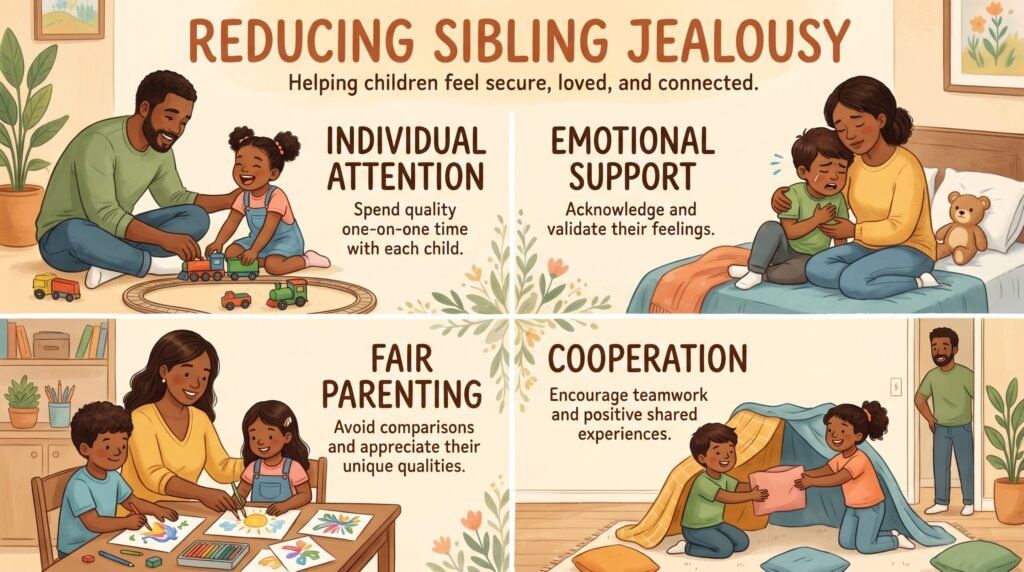
Sibling Jealousy How to Help Children Feel Loved and Valued
Sibling Jealousy is a common family challenge that can develop when children compete for parental attention, affection, recognition, or personal belongings. One child may feel overlooked when parents spend more time caring for another, while siblings may compare their privileges, achievements, and responsibilities.
Parents should understand that jealousy does not necessarily mean children dislike one another. Often, it reflects an emotional need to feel important, secure, and equally appreciated within the family.
Competition for Parental Attention
Children naturally want their parents to notice their feelings, achievements, and everyday experiences. When one child receives more attention, another may respond with frustration, withdrawal, or attention-seeking behavior.
For example, an older child may become upset when parents spend considerable time caring for a new baby. Giving the older child regular individual attention can help reduce these feelings.
Comparing Children With Each Other
Comparisons can create unnecessary competition between brothers and sisters. Statements such as “Your sister is more responsible than you” may make a child feel less capable or appreciated.
Parents should recognize individual strengths instead of measuring one child’s progress against another’s achievements.
Differences in Age and Responsibilities
Older children and younger children often have different needs, abilities, and expectations. Problems can develop when children believe that household rules or parental decisions are unfair.
Explain family responsibilities according to age and maturity rather than expecting every child to receive identical treatment.
Practical Ways to Reduce Sibling Jealousy
Positive Parenting begins with understanding children’s emotions instead of reacting only to their behavior. Parents can reduce tension by creating a home where every child feels heard, respected, and secure.
For additional guidance, explore these practical <a href=”https://beautyrelationship.com/positive-parenting-family-life/“>positive parenting strategies for a happier family life</a>.
Let me explain this in the clearest, simplest terms. Children do not always need equal amounts of everything, but they need to know that their parents love and value them equally.
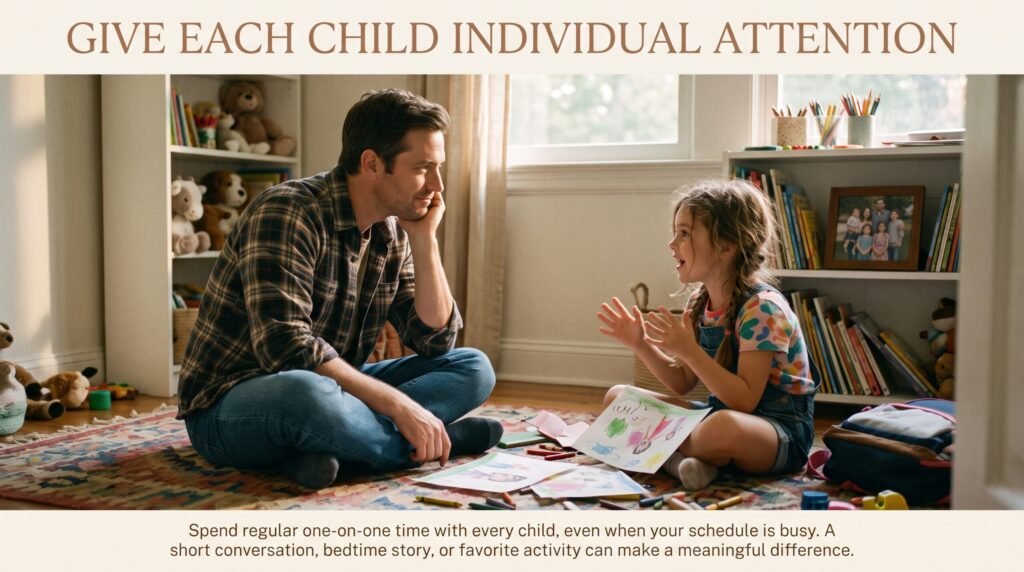
Give Each Child Individual Attention
Spend regular one-on-one time with every child, even when your schedule is busy. A short conversation, bedtime story, walk, or favorite activity can make a meaningful difference.
Ask about each child’s daily experiences.
Celebrate individual achievements.
Listen without unnecessary interruptions.
Make time for activities each child enjoys.
Avoid Favoritism and Unfair Comparisons
Fair parenting means understanding that children have different personalities and needs. Avoid praising one child in a way that makes another feel inferior.
Instead, appreciate their individual efforts and explain decisions calmly when their responsibilities or privileges differ.
Recognize Children’s Feelings
Never dismiss jealousy by saying that a child is being silly or unreasonable. Listen carefully and acknowledge the emotion before discussing appropriate behavior.
You might say, “I understand that you feel left out. You are important to me, and I want to spend some special time with you.”
How to Handle Sibling Rivalry and Reduce Sibling Fights
Sibling Rivalry sometimes appears through arguments, competition, teasing, or disagreements over toys and parental attention. These situations can become more manageable when parents establish consistent expectations and teach children respectful communication.

Listen to Both Children Fairly
When Sibling Fights begin, avoid immediately blaming one child. Allow both children to explain what happened and help them understand each other’s feelings.
The <a href=”https://www.healthychildren.org/English/family-life/family-dynamics/Pages/Sibling-Rivalry.aspx” target=”_blank” rel=”noopener”>American Academy of Pediatrics’ guidance on sibling rivalry</a> can provide parents with additional information about managing disagreements between children.
Teach Children to Solve Disagreements
Encourage children to suggest fair solutions rather than expecting parents to settle every minor disagreement.
| Common situation | Positive parenting solution |
|---|---|
| Fighting over toys | Introduce turn-taking |
| Competing for attention | Arrange individual time |
| Comparing achievements | Appreciate individual strengths |
| Arguing over belongings | Establish personal boundaries |
| Feeling left out | Encourage inclusive activities |
Encourage Respectful Communication
Teach children to express frustration without shouting, insulting, or hurting others. Simple sentences such as “I feel upset when you take my things” can help them communicate more appropriately.
Repeated physical aggression or bullying requires immediate parental intervention rather than allowing children to resolve it alone.
Building Stronger Sibling Relationships Through Everyday Habits
Healthy Sibling Relationships develop through repeated experiences of kindness, cooperation, and mutual understanding. Parents can encourage these qualities without forcing children to become best friends or share every interest.
Parents can also discover more <a href=”https://beautyrelationship.com/healthy-sibling-relationships/“>ways to build healthy sibling relationships</a> through cooperation, shared experiences, and mutual respect.

Encourage Cooperation Instead of Competition
Choose activities where children work toward a shared goal rather than competing against each other.
Complete a puzzle together.
Prepare a simple family meal.
Play cooperative board games.
Work together on a gardening project.
Organize a family movie evening.
Teach Children to Appreciate Each Other
Encourage siblings to notice positive qualities in one another. A simple thank-you, compliment, or helpful action can gradually improve everyday interactions.
Respect Personal Space and Belongings
Children should understand that love and cooperation do not mean giving up personal boundaries. Allow each child to have belongings, hobbies, and private time.
Parents who respect these boundaries often find it easier to encourage more peaceful family interactions.
Common Parenting Mistakes That Increase Sibling Jealousy
Even caring parents can unintentionally encourage competition through everyday words and decisions.
Forcing Children to Share Everything
Sharing is valuable, but children should also have personal possessions. Teach permission and turn-taking instead of demanding that everything belongs to everyone.
Giving One Child Too Much Responsibility
An older sibling should not constantly be expected to sacrifice personal time or supervise younger children. Responsibilities should remain reasonable and suitable for each child’s age.
Ignoring Repeated Emotional Problems
If a child repeatedly expresses sadness, resentment, or fear, take those feelings seriously. Persistent difficulties may require additional guidance from a qualified child psychologist.
For further advice on children’s emotional development and family relationships, consult the <a href=”https://childmind.org/” target=”_blank” rel=”noopener”>Child Mind Institute’s parenting and child development resources</a>.
Conclusion and Brand Credibility
Sibling Jealousy can become easier to manage when parents replace comparisons and competition with understanding, fairness, and individual attention. Children need to feel that they belong, that their voices matter, and that their place in the family is secure. Small daily efforts can gradually improve sibling relationships and create a more peaceful home.
Prof. Waqar Ahmad recommends making emotional support, respectful communication, and positive parenting essential parts of family life. Parents should remember that meaningful relationships grow through patience rather than pressure. This unique insight and practical family guidance are exclusively delivered by BeautyRelationship.com to help parents build thriving, loving homes where every child feels valued and appreciated.
About The Author