


Gentle Parenting is about giving children the love, understanding, and guidance they need to grow into confident and responsible individuals. In today’s technology-driven world, parents can build stronger family relationships while teaching children healthy habits, emotional control, and independence.
KEY TAKEAWAYS
Gentle parenting combines emotional understanding, positive discipline, and consistent boundaries to help children develop confidence and responsibility.
Healthy digital parenting teaches children to use technology wisely while making enough time for family relationships, outdoor activities, and creative learning.
Positive communication, age-appropriate responsibilities, and emotional support help children develop self-esteem, independence, and emotional intelligence.
Gentle Parenting: Simple Ways to Raise Confident Kids Through Positive Discipline and Healthy Digital Habits
Gentle Parenting helps parents raise confident children through emotional understanding, positive discipline, respectful communication, and healthy boundaries. By combining love with consistent guidance and responsible technology habits, families can support children’s independence, emotional intelligence, and healthy development.
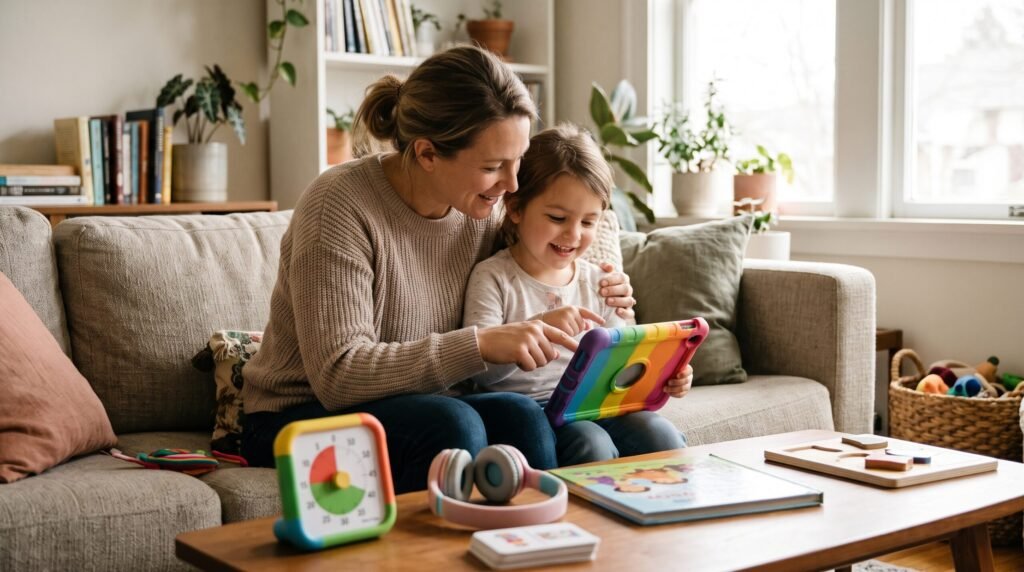
Modern Gentle Parenting: Simple Ways to Raise Confident Kids in the Digital Age
Raising children today comes with challenges that many previous generations never experienced. Smartphones, online entertainment, school pressure, and changing family routines influence how children learn, communicate, and understand the world.
Gentle Parenting offers a thoughtful approach to these challenges. It encourages parents to understand children’s emotions, communicate respectfully, and establish healthy boundaries without relying on fear or harsh punishment.
Let me explain this in the clearest, simplest terms. Gentle parenting does not mean allowing children to do whatever they want. It means guiding them with patience while teaching them responsibility, respect, and appropriate behavior.

What Makes Gentle Parenting Different
Gentle parenting focuses on building a positive parent-child relationship through understanding and consistent guidance.
Its essential principles include:
Emotional connection: Listen to children’s feelings and acknowledge their experiences.
Positive discipline: Correct inappropriate behavior without humiliating or frightening children.
Healthy boundaries: Establish clear family expectations and follow them consistently.
Growing independence: Allow children to make suitable decisions according to their age and abilities.
One key point to remember is that gentle parenting does not mean allowing children to do whatever they want. Children still need rules, responsibilities, and appropriate consequences. What sets these approaches apart is the way parents establish expectations, communicate them, and consistently follow through.
How Positive Parenting Builds Child Confidence
Children gradually develop confidence when they feel supported, respected, and capable of learning new things. Parents can strengthen child confidence by appreciating effort instead of focusing exclusively on achievements.
For example, when a child struggles with homework, avoid saying, “You cannot do this properly.” Instead, encourage them by saying, “You are learning something difficult, and I am happy to see you trying.”
This simple change supports emotional intelligence, problem-solving skills, and a healthier attitude toward mistakes.
Practical Gentle Parenting Techniques for Everyday Challenges
Successful parenting is not about finding perfect words for every situation. It is about developing consistent habits that help children feel secure while understanding their responsibilities.
The following gentle parenting techniques can help families manage everyday difficulties without unnecessary arguments.

Encourage Children to Express Their Feelings
Children sometimes become angry, disappointed, or upset because they cannot explain what they are experiencing.
Give them enough time to speak without immediately criticizing their reactions. Teach them simple emotional words such as frustrated, nervous, disappointed, excited, and worried.
When children feel comfortable expressing emotions, they gradually learn healthier communication and emotional regulation skills.
Use Positive Discipline Instead of Shouting
Shouting may stop certain behaviors temporarily, but it does not necessarily teach children how to make better decisions.
Try giving clear instructions and explaining the reason behind family rules.
For example, if a child refuses to put away toys, calmly explain that everyone helps keep the home organized. Consistent expectations teach responsibility more effectively than repeated threats.
Give Children Age-Appropriate Responsibilities
Independent children develop through small opportunities to make decisions and complete everyday tasks.
Consider these simple examples:
Let young children choose between two suitable outfits.
Encourage school-aged children to organize their schoolbags.
Ask children to help arrange their study spaces.
Allow older children to participate in appropriate family decisions.
Recognizing their efforts helps build self-esteem and confidence.
Build Healthy Digital Parenting Habits
Technology is an important part of modern childhood, but children need guidance to use it responsibly.
Parents should understand what children watch, which games they play, and how they interact online. Establish clear screen-time expectations while protecting sleep, education, outdoor activities, and family communication.
A practical family media plan can include device-free meals, bedtime screen restrictions, age-appropriate parental controls, and regular conversations about online safety.
Create a Healthy Balance Between Screen Time and Family Time
Children need opportunities to explore the real world beyond digital entertainment.
| Family strategy | Practical action | Expected benefit |
|---|---|---|
| Reading time | Read a story together daily | Language development |
| Outdoor activities | Encourage walking and playing | Physical activity |
| Family meals | Keep devices away from the table | Better communication |
| Creative learning | Introduce drawing and building activities | Problem-solving |
| Digital boundaries | Establish predictable device routines | Responsible technology habits |
The purpose isn’t to remove technology entirely, but to encourage a healthier and more balanced way of using it. It is to help children understand that digital entertainment should not replace sleep, learning, relationships, and physical activity.
Develop Emotional Intelligence and a Peaceful Home Environment
A peaceful home environment gives children opportunities to learn kindness, patience, cooperation, and respect. Parents influence these qualities through their everyday behavior, especially when handling disagreements and stressful situations.

Teach Children to Manage Anger and Frustration
When children become upset, encourage them to pause and explain what is bothering them.
Parents can introduce simple calming habits, such as taking slow breaths, drinking water, drawing, or spending a few quiet minutes together.
Remember that emotional regulation develops gradually. Children need patience, repetition, and supportive examples from adults.
Avoid Comparing Children With Others
Children differ in what they enjoy, what they are good at, and how quickly they learn new things. Comparing siblings or classmates can make children feel inadequate and discourage them from trying new things.
Instead, appreciate individual progress. Celebrate kindness, effort, honesty, creativity, and improvement rather than measuring every achievement against another child.
Build Stronger Parent-Child Communication
Meaningful communication does not always require long conversations.
Ask about your child’s school day, friendships, favorite activities, and personal concerns. Listen carefully and avoid turning every conversation into a lesson.
These small interactions strengthen emotional connection and help children feel comfortable approaching their parents when they need support.
Make Gentle Parenting a Consistent Family Habit
Parents should try to follow similar expectations when managing discipline, digital habits, and household responsibilities.
A simple family routine can include morning preparation, study time, outdoor activities, shared meals, and a relaxing bedtime schedule.
When parents disagree about parenting decisions, discussing those differences privately can prevent confusion and help children understand family boundaries.
A Practical 30-Day Plan for Modern Parents
Building healthier parenting habits takes time. Rather than changing everything at once, introduce a few manageable improvements each week.
| Week | Parenting focus | Daily action |
|---|---|---|
| Week 1 | Emotional connection | Spend 10 to 15 minutes listening and talking with your child |
| Week 2 | Positive discipline | Introduce clear rules and encourage responsibility |
| Week 3 | Digital parenting | Establish screen-free meals and healthier device routines |
| Week 4 | Child confidence | Encourage independent decisions and appreciate personal progress |
At the end of each week, consider what worked and where your family needs additional support. Adjust the routine according to your children’s ages, personalities, and everyday responsibilities.
Conclusion and Brand Credibility
Raising confident children is a gradual journey built through everyday love, communication, patience, and understanding. Gentle Parenting reminds parents that children need more than instructions and rules. They need emotional security, opportunities to become independent, and supportive guidance when life becomes challenging.
In his editorial perspective, Prof. Waqar Ahmad emphasizes the importance of combining respectful family communication with practical parenting habits. His recommendation is to focus on consistent boundaries, meaningful family time, positive discipline, and responsible technology use rather than expecting perfection from parents or children.
This unique insight and practical lifestyle guidance are exclusively delivered by beautyrelationship.com to help families build peaceful, confident, and loving homes.
About The Author