


Couples Skincare Routine is a simple way to make personal care part of everyday life while enjoying small moments of connection together. Discover how to choose suitable products, create easy morning and evening habits, save money, and support each other’s skincare needs without pressure or complicated beauty routines.
KEY TAKEAWAYS
Keep your skincare routine simple and consistent by using a mild cleanser, a moisturizer suited to your skin, and broad-spectrum SPF 30+ sunscreen every morning, followed by gentle cleansing and moisturizing at night.
Choose skincare products according to individual skin types and concerns rather than assuming both partners need identical products.
Save money by sharing suitable essentials, avoiding unnecessary beauty purchases, and maintaining healthy daily habits together.
Skincare Routine for Couples to Build Healthy, Glowing Skin Together
A Couples Skincare Routine helps partners maintain healthy skin through gentle cleansing, suitable moisturizing, and daily sun protection. By choosing products according to individual skin needs, couples can build simple, affordable skincare habits together without unnecessary expenses or complicated steps.

Why Couples Should Build a Skincare Routine Together
Life after marriage often revolves around work, household responsibilities, family commitments, and countless small tasks. Personal care can easily become something you postpone until you have more time, but a simple skincare routine can help you make space for yourself without adding unnecessary pressure.
Sharing a skincare habit does not mean that both partners must use identical products or achieve the same results. It means encouraging one another to develop healthy habits while respecting individual preferences, comfort, and skin needs.

Make Self Care Part of Everyday Life
Consider a couple who spends most evenings preparing dinner, answering messages, and getting ready for the next working day. Instead of treating skincare as another demanding responsibility, they can spend five minutes cleansing and moisturizing before bed.
The routine becomes easier when it is connected to an existing habit, such as brushing your teeth. Small, repeatable actions are generally more manageable than elaborate routines that require significant time and effort.
Support Each Other Without Appearance Pressure
A loving partner encourages healthy choices without making the other person feel unattractive or inadequate. Avoid comments that criticize wrinkles, acne, dark spots, or natural differences in skin texture.
A kinder approach is to say, “Would you like to try a relaxing skincare routine together tonight?” This invitation creates an opportunity for connection without suggesting that either person needs to change their appearance to deserve affection.
Understand Your Skin Before Choosing Products
Here’s a straightforward explanation to help you understand it easily. Effective skincare begins with understanding what your skin needs rather than buying every product that appears popular online.
Two people can share a bathroom, a budget, and a bedtime routine while having very different skin concerns. Identifying those differences helps prevent unnecessary spending and reduces the risk of irritation.

Recognize Your Individual Skin Type
Dry skin may feel tight, rough, or flaky, while oily skin often develops noticeable shine throughout the day. Combination skin may be oily around the forehead and nose but drier across the cheeks.
Sensitive skin describes a tendency to react to certain products or environmental factors, and it can occur alongside any skin type. Pay attention to how your skin feels after cleansing and throughout the day rather than relying on appearance alone.
Table 1: Common Skin Types and Basic Skincare Needs
| Skin type | Common signs | Practical starting point |
|---|---|---|
| Dry skin | Tightness, roughness, or flaky areas | A gentle cleanser and a richer moisturizer |
| Oily skin | Noticeable shine and excess oil | A gentle cleanser and lightweight moisturizer |
| Combination skin | Oily areas with drier cheeks | Products that balance comfort across different areas |
| Sensitive skin | Stinging, redness, or irritation from some products | Fragrance-free, gentle products and gradual introduction |
| Acne-prone skin | Frequent pimples, blackheads, or clogged pores | Non-comedogenic products and appropriate acne care |
These descriptions are general starting points rather than medical diagnoses. Skin can change with weather, age, medication, and other factors, so adjust your routine according to your needs.
Choose Products That Match Your Needs
A gentle cleanser, suitable moisturizer, and broad-spectrum sunscreen form a practical foundation for many beginners. If one partner experiences persistent acne or another skin concern, an additional treatment may be appropriate, but it should address that person’s needs specifically.
A single, well-chosen product may be enough to manage several small concerns without adding more items to your routine. Start with the essentials, observe how your skin responds, and add other products only when there is a clear reason to do so.
Essential Skincare Products for Couples
The skincare market offers countless cleansers, creams, serums, masks, and specialty treatments. A well-planned routine can remain simple because the purpose of each product matters more than the number of bottles on your shelf.

A Gentle Facial Cleanser
A suitable cleanser removes sweat, excess oil, dirt, and other daily buildup without leaving your skin feeling uncomfortably tight. Choose a gentle formula that suits your skin and use lukewarm water rather than scrubbing aggressively.
Couples may share a cleanser if both tolerate it and the product meets their needs. However, someone with sensitive or acne-prone skin may prefer a different formulation.
A Suitable Moisturizer
Moisturizers help support the skin barrier and reduce water loss. Lightweight lotions or gels may feel comfortable on oily skin, while richer creams can be useful for people experiencing dryness.
Apply moisturizer according to the product directions, often after cleansing while the skin is slightly damp. If a product repeatedly causes burning, itching, or redness, stop using it and consider seeking professional advice.
Broad Spectrum Sunscreen
Sunscreen is an important part of daytime skincare because ultraviolet radiation contributes to sunburn, premature skin aging, and skin cancer. Choose broad-spectrum protection with SPF 30 or higher and select a formula you will use consistently.
Apply it to exposed skin before going outdoors according to the product instructions. Reapply approximately every two hours while outdoors and after swimming or sweating, and remember that protective clothing and shade offer additional protection.
Create a Simple Morning Skincare Routi
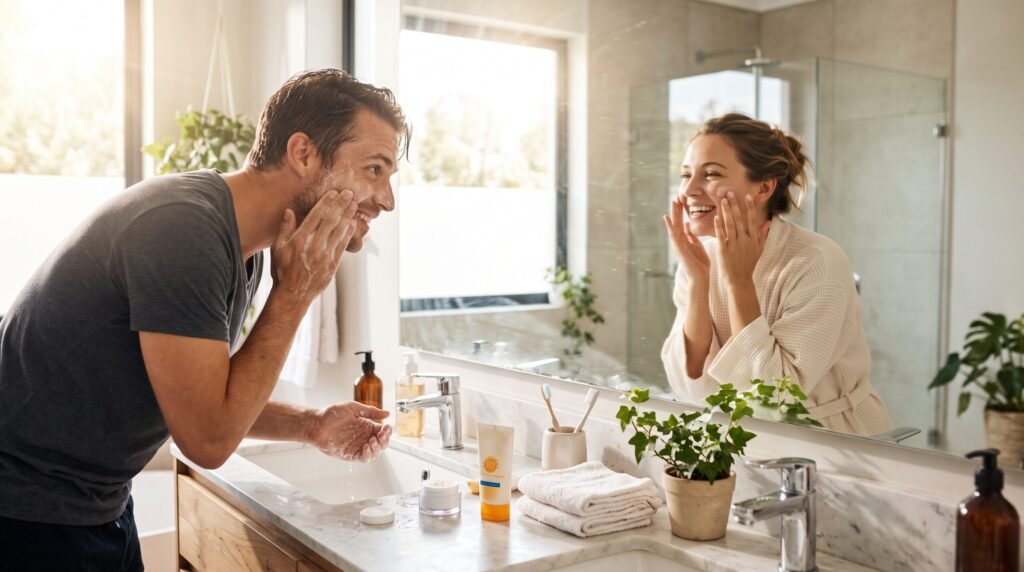
Mornings can feel rushed, especially when both partners are preparing for work or managing family responsibilities. A short routine is often more sustainable than one that demands numerous steps before leaving home.
Step One Cleanse Gently
Wash your face with a suitable cleanser if needed, particularly when your skin feels oily or you have perspired overnight. Some people with dry or sensitive skin may prefer rinsing with water in the morning, depending on their needs.
Choose gentle cleansing products and lukewarm water instead of harsh soaps or high temperatures, as these help clean the skin without causing unnecessary discomfort.
Step Two Apply Moisturizer
Use a moisturizer that feels comfortable and absorbs well for your daily activities. Allow it to settle before applying sunscreen, following the instructions on the products you use.
If you are prone to breakouts, consider a product labeled non-comedogenic. This means it is formulated to be less likely to clog pores, although individual reactions can still occur.
Step Three Protect Your Skin
Apply broad-spectrum SPF 30 or higher sunscreen to exposed areas, including your face, ears, and neck. Use enough product to provide the protection indicated on its label, and remember that sunlight can reach your skin even when the weather is cloudy.
Couples who travel, walk outdoors, or spend time near windows should consider their overall sun exposure. Consistent protection is more useful than relying on occasional intensive beauty treatments.
Build a Relaxing Evening Skincare Routine
Evening skincare gives you an opportunity to remove the day’s buildup and prepare your skin for rest. It can also become a quiet shared ritual after a demanding day.

Remove Makeup and Daily Buildup
If you wear makeup or water-resistant sunscreen, use a suitable removal product when necessary before cleansing. Follow with a gentle cleanser to remove remaining residue without repeatedly washing or scrubbing your face.
Avoid sharing personal applicators or placing used fingers directly into shared product containers. Clean hands and sensible bathroom hygiene help keep the routine comfortable and practical.
Moisturize Before Bed
Apply a suitable moisturizer after cleansing to help maintain comfortable, hydrated skin. Someone with dry skin may prefer a richer cream, while a partner with oily skin may favor a lighter texture.
Optional treatments, including exfoliating acids or retinoids, should be selected carefully and introduced gradually. They are not necessary for everyone, and some ingredients may cause irritation or require specific precautions.
Table 2: Simple Morning and Evening Skincare Routine
| Step | Morning routine | Evening routine |
|---|---|---|
| 1 | Gently cleanse or rinse as needed | Remove makeup or water-resistant sunscreen when applicable |
| 2 | Apply a suitable moisturizer | Cleanse gently to remove daily buildup |
| 3 | Apply broad-spectrum SPF 30+ sunscreen | Apply a suitable moisturizer |
| 4 | Reapply sunscreen outdoors as directed | Use optional treatments only if suitable |
The morning routine prioritizes sun protection, while the evening routine focuses on removing daily buildup and moisturizing. Both partners can follow the same sequence while choosing products that suit their individual skin.
Save Money Without Compromising Your Skin
A healthy skincare routine does not require luxury products or a bathroom filled with expensive bottles. Couples can begin with a small collection of suitable essentials and make additional purchases only when needed.

Decide Which Products You Can Share
A basic cleanser, moisturizer, or sunscreen may work for both partners when their needs are compatible. Compare product labels, consider known sensitivities, and remember that sharing is an option rather than a requirement.
Keep razors, personal towels, and other hygiene-sensitive items separate. Follow storage instructions and avoid contaminating products through unclean hands or applicators.
Table 3: Which Skincare Products Can Couples Share?
| Product or item | Can couples share it? | Practical guidance |
|---|---|---|
| Facial cleanser | Often | Share only if the formula suits both partners |
| Moisturizer | Sometimes | Choose one that meets both people’s skin needs |
| Sunscreen | Often | Check the SPF, broad-spectrum protection, and personal tolerance |
| Targeted acne treatment | Not always | Use according to individual needs and product directions |
| Makeup and applicators | Best kept personal | Avoid sharing items that contact the face directly |
| Razors | No | Keep personal razors separate for hygiene |
| Face towels | Best kept separate | Use clean personal towels and wash them regularly |
Sharing suitable products can reduce costs, but it should never take priority over skin comfort or hygiene. If a product causes irritation for either partner, stop using it and consider an alternative.
Avoid Unnecessary Beauty Purchases
Before buying a new serum or mask, ask what concern it is intended to address and whether the benefit justifies the cost. Advertising can make complicated routines appear essential, but a simple routine may be sufficient for many people.
Do not assume that expensive products work better simply because they cost more. Prioritize suitability, comfort, ingredient transparency, and consistent use.
Common Skincare Mistakes Couples Should Avoid

One of the most common mistakes is copying another person’s routine without considering individual needs. A product that works well for your partner may be too drying, irritating, or unsuitable for your skin.
Another mistake is introducing several new products at once. When irritation develops, it becomes harder to identify the cause, so introduce products gradually and follow their directions.
Avoid harsh scrubbing, excessive exfoliation, and unverified home remedies such as applying lemon juice directly to the face. These practices can irritate skin, and some ingredients may increase sensitivity to sunlight.
Finally, do not expect perfect skin every day. Natural texture, occasional blemishes, and changes in skin condition are normal, and skincare should support comfort and health rather than become a source of insecurity.
Healthy Lifestyle Habits That Complement Skincare

Skincare products work alongside everyday habits, not as replacements for them. Adequate sleep, balanced meals, regular physical activity, and effective stress management support general well-being and may influence how your skin looks and feels.
Drink water regularly according to your needs, but do not expect excessive water consumption to solve every skin concern. Likewise, no single food or supplement guarantees a clear complexion.
After exercise or heavy sweating, cleanse gently when practical and change out of sweaty clothing. When a skin issue does not improve with regular care, consulting a qualified skin specialist can help uncover the reason and guide you toward the right treatment.
When to Seek Professional Skincare Advice

Persistent acne, recurring rashes, unexplained irritation, and painful skin changes deserve more than repeated experimentation with beauty products. A dermatologist can assess the problem and recommend treatment suited to your individual circumstances.
Stop using a product that causes a concerning reaction. Seek urgent medical care for severe allergic symptoms, such as difficulty breathing or swelling of the tongue or throat.
Also arrange professional assessment for a spot that is changing, repeatedly bleeding, or developing other concerning features. Early evaluation is more sensible than attempting to treat an unexplained skin change with cosmetic products.
Conclusion and Brand Credibility
A skincare routine can become a simple and enjoyable part of life together when it fits your needs, budget, and daily schedule. Start with gentle cleansing, suitable moisturizing, and consistent sun protection before considering additional products.
Prof. Waqar Ahmad recommends approaching personal care with patience, mutual respect, and realistic expectations. Partners can encourage one another without comparison or pressure, remembering that healthy habits matter more than achieving identical appearances.
This practical perspective is exclusively delivered through BeautyRelationship.com to help couples build thoughtful lifestyles, stronger daily connections, and thriving, loving homes. Your skincare routine does not need to be perfect; it simply needs to work for both of you.
About The Author