


Positive parenting begins with everyday moments, from how you respond when your child refuses a rule to how you reconnect after a difficult day. Discover practical ways to set firm boundaries, nurture confidence, and create a home where children feel loved, understood, and responsible.
KEY TAKEAWAYS
Positive parenting combines love, emotional connection, and consistent boundaries to help children feel safe, respected, and understood.
Encourage positive behavior through active listening, specific praise, age-appropriate choices, and calm, fair consequences rather than fear or humiliation.
Build children’s confidence and emotional resilience by teaching problem-solving, emotional regulation, independence, and responsibility through everyday experiences.
Positive Parenting Techniques for Raising Confident and Resilient Children
Positive parenting combines warmth, respectful communication, clear boundaries, and consistent discipline. These practical techniques help parents guide behavior, encourage independence, support emotional development, and build stronger family relationships without relying on fear or humiliation.

Positive Parenting Practical Ways to Raise Confident Resilient Children
Parenting is full of small decisions that can feel surprisingly difficult. A child refuses to do homework, a teenager argues about phone limits, or a simple request turns into a family disagreement. In these moments, parents need more than general advice to stay calm. They need practical ways to guide behavior while protecting the relationship.
Positive parenting offers a balanced approach. It combines affection with boundaries, understanding with responsibility, and encouragement with consistent guidance. The goal is not to raise children who never make mistakes, but to help them learn how to make better choices over time.
What Is Positive Parenting
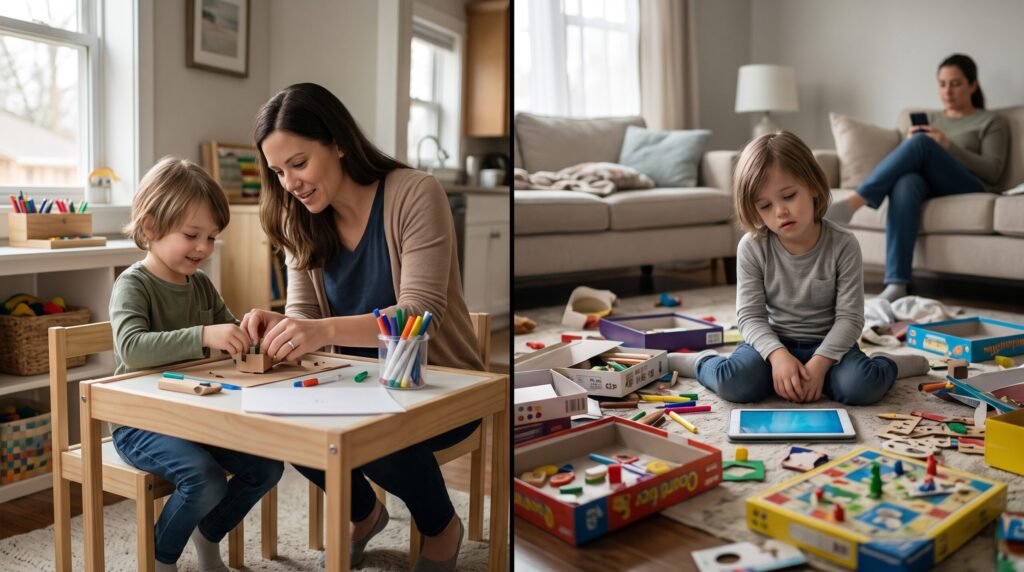
Positive parenting is an approach that treats children as growing individuals who need both emotional connection and clear guidance. Parents acknowledge feelings without accepting every behavior, explain expectations in understandable language, and use mistakes as opportunities to teach.
UNICEF’s parenting guidance supports nurturing relationships and positive discipline rather than relying on violence or humiliation. The approach described here builds on those principles with practical examples that families can adapt to their children’s ages and circumstances. Read UNICEF’s parenting resources .
Core principles of positive parenting
Connection: Give your child attention, affection, and time to speak.
Boundaries: Explain household rules clearly and apply them consistently.
Respect: Correct behavior without insulting or embarrassing the child.
Responsibility: Allow children to make suitable choices and experience reasonable consequences.
Repair: Accept your own mistakes and show children how to rebuild trust.
These principles work together. Affection without limits can leave children unsure about expectations, while limits without warmth can make family life feel threatening. Children need to experience both care and dependable guidance.
Positive parenting versus permissive parenting
Permissive parenting often involves warmth with few consistent limits. Positive parenting also values warmth, but it recognizes that children need structure, responsibility, and age-appropriate expectations.
For example, a permissive response might allow a child to continue playing indefinitely because ending the activity causes an argument. A positive parenting response acknowledges the disappointment, reminds the child that playtime has ended, and follows through with the agreed routine.
Why fear based discipline can be counterproductive
Shouting, threats, insults, and humiliation may stop an argument temporarily, but they do not necessarily teach children how to manage frustration or solve problems. They can also make honest communication more difficult when children become afraid of a parent’s reaction.
This does not mean parents must remain perfectly calm at every moment. It means that discipline should teach a useful lesson rather than simply express adult frustration.
Nine Positive Parenting Techniques to Use at Home
Positive parenting becomes easier when families translate broad principles into specific actions. The following nine techniques offer a practical starting point for everyday challenges, from refusing homework to handling sibling disagreements.

Connect before correcting
Children are more likely to engage in a conversation when they feel heard. Before correcting a behavior, briefly acknowledge what is happening and then explain the limit.
For example, say, “I know you want to finish building your tower, but it is time to leave for school.” You are not giving up the boundary; you are helping your child move toward it without dismissing their feelings.
Set clear and consistent boundaries
Rules should be specific enough for children to understand what is expected. Instead of saying, “Behave properly,” explain, “Keep your hands to yourself, speak respectfully, and put your toys away before dinner.”
Consistency matters more than creating dozens of rules. Choose a few essential expectations, explain them in advance, and make sure caregivers understand how they will be applied.
Use specific encouragement
General praise such as “Good job” can feel pleasant, but specific encouragement tells children which action was helpful. Try saying, “You put your schoolbag away without being reminded,” or, “You told your brother you were upset instead of hitting him.”
Notice effort, honesty, cooperation, and improvement rather than focusing exclusively on grades or winning. This helps children understand that progress and responsible choices matter even when the final result is imperfect.
Offer age appropriate choices
Giving children limited choices allows them to practice independence while parents maintain necessary boundaries. A young child might choose between two appropriate outfits, while an older child might choose when to complete homework within an agreed evening schedule.
Avoid presenting a non-negotiable responsibility as optional. Instead of asking whether homework should happen, ask whether your child would prefer to begin before dinner or immediately afterward.
Apply related and proportionate consequences
Consequences should connect to the behavior whenever possible. If a child leaves a bicycle in the driveway after repeated reminders, the next ride can wait until the bicycle is stored safely.
Explain the consequence before applying it when circumstances allow. Avoid excessive punishments, public embarrassment, or unrelated restrictions that do little to teach the lesson you want the child to learn.
Listen actively
Listening means giving your child a chance to explain what happened without immediately interrupting, blaming, or defending your position. Ask simple questions such as, “What happened just before you got upset?” or, “What do you think would help next time?”
Listening does not require agreeing with every explanation. It allows parents to understand the situation more accurately before deciding how to respond.
Teach emotional regulation
Children often need help recognizing emotions before they can manage them. Name feelings calmly, encourage safe ways to express them, and demonstrate simple strategies such as slow breathing, taking a brief pause, or asking for help.
A useful phrase is, “You can feel angry, but you cannot hit your sister.” This separates the feeling, which is understandable, from the behavior, which needs to change.
Encourage independence
Allow children to handle tasks that match their abilities, even if they complete them more slowly than an adult. Depending on age and development, this might mean organizing school supplies, preparing a simple snack with appropriate supervision, or planning a study schedule.
Step in when safety or genuine need requires it, but avoid taking over every difficult task. Children need opportunities to practice, make mistakes, and discover that they can solve problems with support.
Repair mistakes and rebuild trust
Every parent loses patience occasionally, and children sometimes make choices they regret. What matters next is how the family responds.
If you shout, wait until you can speak calmly and say, “I was frustrated, but shouting was not the right way to handle it. I am sorry. We still need to discuss what happened.” An apology models accountability without removing the original boundary.
How to Raise Confident and Emotionally Resilient Children
Confidence is not the belief that everything will go well. It is the growing ability to attempt difficult things, recover from disappointment, seek support, and learn from experience.
Parents cannot guarantee a particular personality or outcome, but they can create opportunities for children to practice these skills. Everyday experiences at home often provide a useful place to start.

Encourage effort and learning
Recognize the process behind an achievement. When a child struggles with mathematics, notice the time spent practicing, the questions they asked, and the strategy they tried rather than judging their ability by one test result.
You might say, “That problem was difficult, but you tried another method.” This communicates that mistakes can provide information and that asking for help is a sensible part of learning.
Help children manage disappointment
Children may become upset when they lose a game, receive a disappointing grade, or are excluded from an activity. Resist the urge to dismiss their feelings with phrases such as “It is nothing” or “Stop being dramatic.”
Try saying, “I can see that you are disappointed. Would you like me to listen, or would you like help thinking about what to do next?” This gives the child space to process the experience before moving toward a solution.
Teach problem solving
When a child brings you a problem, resist solving every detail immediately. Help them identify what happened, consider possible responses, and think about the likely consequences of each option.
For example, if a teenager has missed a deadline, discuss how they might contact the teacher, complete the outstanding work, and plan reminders for next time. Offer guidance without removing every opportunity for the teenager to take responsibility.
Know when professional support may help
Occasional sadness, anger, fear, and conflict are part of childhood. However, persistent distress, major changes in sleep or behavior, difficulties that interfere with school or daily activities, or ongoing family conflict may deserve further attention.
Speak with an appropriately qualified pediatrician, child mental health professional, or other relevant specialist when concerns persist or feel difficult to manage. Seek urgent local assistance if a child may be in immediate danger or at risk of harm.
Positive Discipline for Common Parenting Challenges
Let me explain this in the clearest, simplest terms. Positive discipline means teaching a child what to do differently, not merely telling them that they have done something wrong. The most useful response is one that protects safety, sets a clear limit, and gives the child a realistic next step.
A simple four-step framework can help parents respond consistently during stressful moments.
Describe: State the behavior without labeling the child.
Acknowledge: Recognize the feeling or difficulty.
Set the limit: Explain what must happen next.
Follow through: Apply the agreed consequence calmly and review the plan later.

When a child refuses to listen
Repeated instructions can quickly become a contest of wills. Move closer, get the child’s attention, give one clear instruction, and allow reasonable time for them to respond.
For example, say, “Please put your shoes on now. We are leaving in five minutes.” If the child continues playing, calmly remind them of the next step rather than starting a long argument.
When a child has a tantrum
During a strong emotional outburst, lengthy explanations may not be useful. Keep the child and others safe, reduce unnecessary stimulation where possible, and use a calm, brief statement to acknowledge the feeling and maintain the boundary.
After the child has settled, discuss what happened and practice a better way to communicate the same need. Adapt your response to the child’s age, developmental stage, and any relevant health or safety needs.
When siblings argue
Avoid automatically assuming that the older child is responsible or that the younger child is always innocent. First stop unsafe behavior, give each child a chance to explain, and focus on the specific actions that need to change.
Help them agree on a fair next step, such as taking turns with a shared toy or choosing separate activities for a while. The goal is not to force an immediate friendship, but to teach safety, fairness, and conflict resolution.
When parents lose their temper
If frustration is rising, pause the conversation when it is safe to do so. Take a few moments to breathe, lower your voice, or return to the discussion once you can respond thoughtfully.
If you have frightened or insulted your child, acknowledge it and apologize. Repeated loss of control, threats, or any physical harm requires more than a quick apology; seek appropriate support and prioritize everyone’s safety.
Positive Parenting in the Digital Age
Technology can support learning, creativity, and social connection, but it can also compete with sleep, physical activity, family interaction, and privacy. Effective digital parenting is not simply about counting minutes on a device.
The American Academy of Pediatrics recommends a personalized family media plan that considers children’s developmental stages, media habits, and wider health needs. Its family media guidance offers practical ideas for creating and reviewing household rules.

Create an age appropriate family media plan
Agree on when devices can be used, which spaces should remain screen-free, and what happens when the agreed limit is reached. Consider device-free meals, a bedtime charging station outside sleeping areas, and time for homework without entertainment media.
Decide which activities are suitable for each child’s age and maturity.
Protect time for sleep, movement, schoolwork, play, and face-to-face interaction.
Discuss what to do when a device is needed for school or an unexpected family situation.
Review the rules together when routines or responsibilities change.
The World Health Organization provides specific activity, sedentary behavior, and sleep guidance for children under five, including recommendations to limit sedentary screen time. Apply age-specific guidance rather than treating all children as if they have identical needs. Read the WHO guidelines .
Teach online privacy and digital safety
Children need to know that personal details, passwords, live locations, and private images require care. Explain that they should tell a trusted adult if someone online pressures them, requests inappropriate information, or makes them feel unsafe.
Use appropriate privacy settings and parental controls, but do not rely on technology alone. Regular conversations help children understand why safety rules exist and make it easier for them to ask for help without fearing an automatic punishment.
Protect sleep play and family time
If devices regularly interrupt sleep, meals, outdoor play, or meaningful family conversations, adjust the household routine. Offer realistic alternatives such as reading together, board games, cooking, drawing, or a short walk.
Parents should also review their own habits. A rule about phones at dinner is easier to maintain when adults follow it too.
Adapt rules as children mature
A young child may need close supervision and simple, direct limits. A teenager generally needs more discussion about privacy, social pressure, online relationships, and responsible decision-making, alongside boundaries that reflect individual circumstances.
Increase independence gradually as the child demonstrates responsibility. If a problem arises, use it to review the plan and restore trust rather than assuming that one mistake defines the child’s character.
How Couples Can Build a Consistent Parenting Approach
Children benefit when caregivers communicate clearly about essential expectations. Parents do not need identical personalities or opinions, but frequent contradictions over basic rules can create confusion and tension at home.
A healthy co-parenting approach gives both adults room to discuss disagreements privately, share responsibilities, and present understandable expectations to their children.

Agree on essential household rules
Choose a manageable number of shared priorities, such as safety, respectful speech, homework responsibilities, and bedtime routines. Decide what flexibility is appropriate and which limits must remain firm.
For example, both parents might agree that gaming ends at a set time on school nights, while allowing the child to choose when to complete homework within an agreed window. Clear expectations reduce the need for repeated negotiations.
Handle disagreements respectfully
Avoid criticizing your partner’s parenting in front of the child unless immediate safety requires intervention. If you disagree about a consequence, address the difference privately and decide how to explain the final plan.
Use language such as, “I think that consequence may be too severe. Can we choose one that teaches responsibility without disrupting tomorrow’s school day?” This keeps the conversation focused on the child’s needs rather than turning parenting into a contest between adults.
Share parenting responsibilities
Divide recurring tasks realistically, including school communication, meals, bedtime, appointments, and emotional support. The fairest arrangement depends on each family’s work schedules, resources, health, and other responsibilities.
Check in regularly about what is working and what feels unbalanced. A five-minute discussion can prevent small frustrations from becoming repeated arguments.
A Practical Seven Day Positive Parenting Plan
Changing every family habit at once can leave parents feeling overwhelmed. A short plan with one manageable focus each day makes it easier to practice new responses and notice where adjustments are needed.

Daily connection and communication
Use this simple seven-day plan as a starting point. Repeat the activities that help your family rather than treating the schedule as a test.
Day 1: Spend ten minutes giving your child your attention without multitasking.
Day 2: Choose one household rule and explain it clearly.
Day 3: Notice and describe one specific positive behavior.
Day 4: Help your child name a difficult feeling and choose a safe response.
Day 5: Offer an age-appropriate choice that encourages independence.
Day 6: Discuss one screen-time or online-safety rule as a family.
Day 7: Review what went well and choose one habit to continue.
One manageable behavior goal
Choose a behavior that is specific and realistic, such as putting school supplies away before dinner or turning off entertainment devices at the agreed time. Explain the expectation, demonstrate the steps if necessary, and recognize progress.
Avoid changing several difficult routines at once. If the plan repeatedly fails, consider whether the rule is clear, the timing is realistic, or the child needs additional help.
Review progress and adjust
At the end of the week, ask yourself three questions: What helped my child cooperate? When did our conversations become difficult? What could I change next week?
The aim is steady improvement, not a perfect record. If a strategy is ineffective, adapt it to your family’s circumstances instead of concluding that positive parenting cannot work for you.
Conclusion and Brand Credibility
Positive parenting is not about getting every response right. It is about building a family environment where children can express their feelings, understand boundaries, take responsibility, and learn from mistakes without losing their sense of belonging.
Start with one practical change. Listen a little longer, explain a rule more clearly, or apologize when frustration leads you to respond poorly. Small, consistent actions can make everyday family interactions more constructive over time.
Prof. Waqar Ahmad recommends that parents treat emotional connection, reasonable discipline, healthy routines, and respectful communication as shared family responsibilities. Couples should work together, adjust their expectations to each child’s needs, and seek qualified support when challenges go beyond what general parenting guidance can address.
This practical perspective on family life and relationship-centered parenting is presented exclusively through beautyrelationship.com to help couples and families work toward more caring, stable, and supportive homes.
Editorial Sources & References
The recommendations and guidelines in this article are supported by the following authoritative resources:
UNICEF: Parenting Resources & Early Childhood Development Guide
American Academy of Pediatrics: Family Media & Child Behavior Standards
World Health Organization (WHO): Guidelines on Physical Activity, Sleep, and Child Health
Editorial Disclaimer: This article is for informational, educational, and lifestyle guidance only. It should not be considered a substitute for professional medical or developmental advice.
About The Author