


Emotional intimacy can quietly fade when marriage becomes centered on children, work, bills, schedules, and responsibilities. This guide explores how couples can find their way back to meaningful conversation, affection, friendship, romance, and the feeling of being truly seen again.
Emotional Intimacy in Marriage and Practical Ways to Reconnect
Emotional intimacy grows through small, consistent moments of attention, appreciation, honest conversation, affection, friendship, and repair. Couples can rebuild closeness by changing everyday interaction patterns rather than expecting one romantic gesture to solve years of distance.
When Marriage Starts Feeling More Like a Partnership Than a Romance
Long-term marriage can be full of love while still feeling emotionally distant. Two people may share a home, raise children, manage finances, attend family events, and sleep in the same room, yet privately wonder when they stopped feeling like partners in each other’s inner lives.
The research brief for this article identifies this “roommate” experience as a central reader concern, particularly when conversations become mostly practical and affection or curiosity gradually disappear. The important point is not to immediately label the marriage as broken, but to notice the pattern and understand what may be underneath it.
What feeling like roommates really means
A roommate-style marriage does not necessarily mean that two people dislike each other. Often, it means the relationship still functions efficiently while emotional connection has received less attention.
The couple may know each other’s schedules perfectly but know very little about what the other person is currently worried about, excited about, dreaming about, or struggling with. That difference between managing life together and experiencing life together can create a surprisingly deep loneliness.
Why distance often develops quietly
Emotional distance rarely appears overnight. It can grow through years of tired evenings, unresolved disagreements, parenting demands, demanding jobs, financial pressure, different routines, health challenges, or simply becoming accustomed to one another.
At first, a missed conversation may seem insignificant. Eventually, however, both partners can become used to not asking, not sharing, not reaching out, and not expecting much emotional response.
Why distance does not automatically mean love is gone
A quieter relationship is not automatically a loveless relationship. Couples move through different seasons, and closeness can change as responsibilities and circumstances change.
The more useful question is often not “Do we love each other anymore?” but “What has happened to the ways we show that love and experience it together?” That shift can create room for practical action rather than fear.

What Emotional Intimacy Really Means in Marriage
Emotional intimacy is the experience of being known, heard, valued, and emotionally safe with another person. It involves more than having deep conversations once in a while because closeness is also built through ordinary moments.
The supplied research brief defines emotional intimacy through understanding, emotional safety, curiosity, appreciation, respectful disagreement, shared hopes, affection, laughter, repair, and responsiveness.
Emotional intimacy is different from communication
Communication is necessary, but not every conversation creates emotional closeness. Discussing school pickups, grocery lists, mortgage payments, appointments, and dinner plans keeps a household functioning without necessarily revealing what either partner is experiencing internally.
Emotional communication asks something deeper. It gives partners opportunities to understand not only what happened during the day, but how the day affected them.
Emotional intimacy is different from physical intimacy
Physical affection can support closeness, but emotional intimacy should never be reduced to sexual contact. A couple may hold hands, kiss, or share sexual intimacy while still avoiding vulnerable conversations.
Likewise, a couple may temporarily have little physical intimacy because of stress, parenting, health, fatigue, or other circumstances while remaining emotionally close. The healthiest approach is to recognize these forms of intimacy as related but not identical.
What emotional connection looks like in ordinary life
Emotional connection can be remarkably simple. It may look like remembering an important meeting, asking about something your spouse mentioned yesterday, sitting together without phones, noticing exhaustion, sharing a private joke, or saying thank you for an invisible responsibility.
These moments may not look romantic from the outside. Inside a marriage, however, they can communicate something powerful: “I notice you, and your experience matters to me.”
Why Couples Become Emotionally Distant After Years of Marriage
The causes of emotional distance are rarely identical from one marriage to another. The editorial research for this topic identifies routine, parenting, work pressure, resentment, repeated conflict, changing priorities, physical disconnection, taking each other for granted, and emotional withdrawal as important areas to examine.
Understanding the cause matters because different problems require different responses.
Routine can replace curiosity
When a couple has been together for many years, familiarity can become both a strength and a trap. You may know what your spouse usually orders, how they respond to stress, and what time they come home, so you stop asking questions.
The problem is that people continue changing. Your spouse at 45 may have different hopes, fears, interests, frustrations, and ambitions than the person you married years ago.
Parenting can push the marriage into the background
Children naturally require enormous attention. School schedules, meals, homework, activities, health appointments, discipline, and emotional needs can consume the hours that once belonged to the couple.
Over time, spouses can become excellent co-parents while becoming less intentional romantic partners. Family life becomes organized, but the marriage itself receives very little private attention.
Work and financial pressure can drain emotional energy
A person under constant work pressure may arrive home physically present but mentally exhausted. Financial uncertainty can produce worry that leaves little emotional space for romance or meaningful conversation.
This does not excuse neglect, but it can explain why a couple may need to reduce the pressure around reconnection. Sometimes rebuilding intimacy starts with understanding the exhaustion before demanding more emotional energy.
Resentment changes how connection feels
Resentment is particularly important because it can make ordinary attempts at affection feel artificial. If one spouse believes they carry most of the household work, parenting responsibility, financial pressure, or emotional labor, a romantic evening may not address the real problem.
A lasting reconnection effort therefore needs honesty about practical fairness. Romance cannot permanently cover an unresolved sense of being unsupported.
Repeated conflict can encourage withdrawal
After enough difficult conversations, some couples stop talking about important subjects because they expect another argument. Silence then becomes a form of protection, even though it also creates distance.
Over time, partners may know how to avoid fighting without learning how to reconnect. That is one reason a peaceful-looking marriage can still contain significant loneliness.
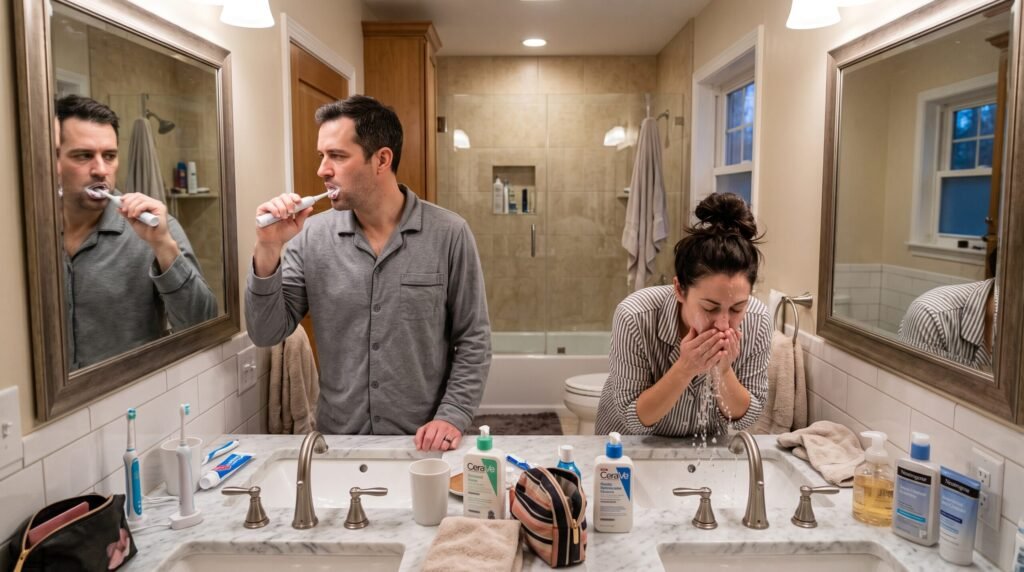
Signs Your Marriage Has Become a Roommate Relationship
Not every sign means there is a serious relationship problem. However, several patterns appearing together can be useful signals that the couple’s emotional connection deserves attention.
You mostly discuss responsibilities
Your conversations may revolve around children, bills, work, shopping, appointments, meals, and household tasks. Practical communication is healthy and necessary, but it becomes concerning when almost nothing personal remains.
You rarely ask about each other’s inner world
You may know what your spouse did all day without knowing how they actually felt about it. Emotional intimacy requires curiosity about the person behind the schedule.
Affection has become uncommon
Hugs, kisses, holding hands, compliments, sitting close, or casual touches may gradually disappear. Sometimes neither person consciously decided to stop being affectionate; it simply became less common.
You spend most free time separately
Separate hobbies are not inherently unhealthy. The concern arises when nearly all enjoyable time happens independently and the couple no longer has meaningful shared experiences.
You feel lonely while sitting beside your spouse
For many people, this can be an especially painful and deeply upsetting indication. Physical proximity does not guarantee emotional connection, and loneliness within a marriage can feel especially confusing because the person you want beside you is already there.
Can Emotional Intimacy Be Rebuilt After Many Years
Yes, couples can work toward greater emotional closeness, but rebuilding it is usually a process rather than a dramatic turning point. The research brief deliberately emphasizes gradual behavioral change instead of promising that one conversation, weekend, or romantic gesture will repair years of distance.
The most useful mindset is to look for small changes that can be repeated. A marriage does not need a perfect restart; it needs new patterns that gradually become familiar.
Why small changes matter
Relationship research associated with the Gottman program places substantial attention on everyday attempts to connect, often described as “bids,” and on how partners respond to those attempts.
A bid can be a question, a comment, a sigh, a joke, a request for help, or an invitation to share an experience. Responding with attention rather than routinely ignoring the moment can help create a stronger sense of connection.
What progress can realistically look like
Progress may initially be very ordinary. Conversations may become slightly easier, partners may share more personal details, small affectionate gestures may return, or disagreements may end with less emotional residue.
Do not expect every day to feel romantic. A healthier measure is whether the overall pattern is gradually moving toward more curiosity, responsiveness, appreciation, safety, and shared enjoyment.
Step One Stop Treating Time Together as the Whole Solution
Many couples say they need more time together, and they may be correct. But simply sitting in the same room does not automatically produce emotional intimacy.
The more useful goal is connected time, meaning moments when both people are mentally and emotionally present.
Conduct a relationship reality check
Each partner can privately consider:
- When did we begin feeling distant?
- What changed around that time?
- What do I miss about us?
- What do I currently need emotionally?
- What do I appreciate about my spouse?
- What am I contributing to the distance?
- What small change would help me feel closer?
These questions are adapted from the practical framework in the supplied content brief.
The purpose is not to build a case against your spouse. It is to understand the relationship from both sides before deciding what needs attention.
Step Two Restart Everyday Conversation
If every conversation has become logistical, do not immediately demand a two-hour heart-to-heart. Start by creating small opportunities for personal conversation that feel manageable.
Move beyond logistics
Instead of asking only whether your partner completed a task, ask something that gives them room to share an experience.
Try asking:
- What was the most memorable part of your day?
- What stayed on your mind today?
- Was anything harder than you expected?
- Is there anything you’re especially excited about in the week ahead?
- Is there anything you wish I understood more deeply about how you feel?
- Let me explain this as clearly and simply as I can. The goal is not to interrogate your spouse with endless questions; it is to show genuine interest in the person you are living beside.
Listen without immediately fixing
Sometimes a spouse wants understanding rather than a solution. If your partner says they had a difficult day, jumping directly into advice can unintentionally communicate that their feelings are a problem to solve.
Try listening first. A simple response such as “That sounds exhausting” or “I can understand why that stayed with you” may create more emotional room than an immediate list of solutions.
Step Three Notice Bids for Connection
The Gottman framework describes bids as everyday attempts to connect and distinguishes responses that turn toward, away from, or against the partner.
This idea is especially useful for couples who feel like roommates because reconnection often begins before either person has a dramatic conversation about the marriage.
Recognize everyday bids
A bid might look like:
- “Look what I found.”
- “Listen to this song.”
- “I had such a strange meeting today.”
- “Do you want some tea?”
- “Come and see this.”
- A meaningful glance or smile
- A request for help or reassurance
Not every bid requires a long response. Sometimes looking up, making eye contact, smiling, or asking one follow-up question is enough to show that you noticed.
Turn toward more often
Turning toward means responding with some degree of attention instead of routinely dismissing the moment. Research materials from the Gottman Institute describe these small responses as part of the everyday foundation of trust and emotional connection.
What matters isn’t getting the perfect response every time. Everyone gets distracted, tired, busy, or overwhelmed. The practical goal is to make responsiveness the general pattern rather than the rare exception.

Step Four Bring Appreciation Back Into the Marriage
Appreciation can disappear when people become accustomed to what their partner contributes. The dishwasher gets emptied, children get picked up, bills get paid, meals get prepared, and work gets done, but nobody says anything because these efforts have become invisible.
Specific appreciation is usually more meaningful than automatic compliments.
Use the Notice Name Appreciate method
Try this simple pattern:
Notice → Name → Appreciate
Rather than giving a general compliment like, “You’re great,” try something more specific: “I noticed how you took care of the school issue today, even though you were already exhausted.”
I really appreciate that.”
Specific recognition tells your spouse that you are paying attention. It also helps correct the feeling that their daily contributions have become invisible.
Step Five Rebuild Friendship Before Chasing Romance
Romance often becomes easier when partners enjoy one another again. The supplied editorial brief places friendship, curiosity, shared interests, laughter, and rediscovering one another at the center of reconnection.
Relationship research from the Gottman program similarly emphasizes friendship and everyday connection as important parts of relationship functioning.
Discover who your spouse is now
Ask about something your spouse cares about today, not something they cared about ten years ago. You may discover a new interest, ambition, concern, hobby, or dream that you have never really explored.
Try something together that neither of you normally does. Cook a new recipe, visit a local place, play a board game, take an evening walk, look through old photographs, or plan a small future trip.
Step Six Create Small Rituals of Connection
Couples often imagine reconnection requires expensive dates or elaborate vacations. Those experiences can be enjoyable, but emotional closeness can also be supported by small rituals that fit ordinary life.
Build simple daily rituals
A couple might choose a ten-minute evening check-in, a morning goodbye hug, tea together after the children sleep, a weekly coffee date, or one technology-free meal.
The exact ritual matters less than its consistency. The supplied content framework specifically recommends small daily and weekly connection practices rather than making expensive dates the central solution.
Step Seven Have Difficult Conversations Without Increasing Distance
A difficult conversation does not have to become a courtroom. The goal is to explain your experience clearly enough that your spouse can understand what is happening inside you.
Use Observation Feeling Need Request
A useful structure is:
Observation → Feeling → Need → Request
For example:
“I’ve noticed that so much of our time together is spent talking about responsibilities and plans. I miss feeling connected to you, and I’d like us to make some space to just be together as a couple.” Could we spend 20 minutes together tonight without our phones?”
This approach is more specific than saying, “You never care about me anymore.” The first statement describes a pattern and makes a clear invitation rather than attacking the person’s character.
Give your partner time to respond
Emotional processing can look different from one person to another. One spouse might be ready to discuss things immediately, while the other may need a little time to reflect before opening up.
Allowing a pause does not mean abandoning the conversation. It means creating enough emotional space for both people to participate rather than demanding an instant response.
Step Eight Learn to Repair After Arguments
Every long-term couple will experience disagreement. What matters is not pretending conflict can disappear, but learning how to return to one another afterward.
Research on post-conflict behavior has found that active repair and gaining a new perspective were associated with better emotional recovery, while avoidance was associated with poorer recovery on conflict days.
Pause when emotions become overwhelming
If both partners are becoming flooded with anger, stopping temporarily can be more constructive than forcing the conversation forward. The important part is to return to the subject later rather than using the pause as permanent avoidance.
The supplied research brief also notes Gottman-related experimental work concerning breaks and physiological arousal during conflict.
Apologize without defending everything
A meaningful apology does not require admitting that you were wrong about every part of the disagreement. It means taking responsibility for the part you can honestly own.
You might say, “I became defensive, and I can see how that made you feel dismissed. I want to handle that part differently next time.”
Step Nine Rebuild Physical Affection Without Pressure
When emotional distance has lasted for a long time, suddenly expecting intense physical intimacy can create pressure rather than closeness. A gentler approach is to rebuild comfort through affection that both partners genuinely welcome.
Start with simple affection
Depending on the couple’s comfort and boundaries, reconnection might begin with:
- Holding hands
- A longer hug
- Sitting closer
- A gentle touch on the shoulder
- A kiss goodbye
- Cuddling while watching a film
- Sharing a quiet moment together
Affection should not become an obligation or a bargaining tool. Consent, comfort, and mutual willingness remain important.

Step Ten Rebuild Sexual Intimacy Through Emotional Safety
Sexual intimacy can be affected by stress, resentment, communication difficulties, body-image concerns, changing desire, parenting demands, health factors, or emotional distance. It is therefore unhelpful to treat sexual disconnection as a simple lack of romance.
Talk about desire without criticism
Partners need room to discuss preferences, boundaries, frequency, rejection, discomfort, and expectations without humiliation. A meaningful conversation is about listening and understanding one another, rather than trying to win the argument.
Research discussed by the supplied brief notes a relationship between comfortable communication about sexual needs and reported sexual satisfaction, while appropriately avoiding a universal guarantee.
Remove performance pressure
Intimacy becomes harder when every affectionate moment is expected to lead somewhere. A couple can rebuild closeness through touch, conversation, cuddling, affection, and shared experiences without assuming that every moment must become sexual.
That freedom can make affection feel safer and more natural again.
Step Eleven Rediscover Romance After Years of Marriage
A lasting romance doesn’t need to recreate the excitement of those first years together.Mature romance can be quieter, more personal, and better suited to the lives two people actually share.
Make romance realistic
Consider:
- A coffee date after the children sleep
- Cooking dinner together
- Dressing nicely for an evening at home
- Recreating an early relationship memory
- Writing a short handwritten note
- Looking through wedding photographs
- Taking an evening walk
- Planning a short couple’s getaway
- Celebrating an ordinary milestone
The purpose is not to create a picture-perfect evening. It is to remind both people that their relationship deserves experiences that are not exclusively about managing responsibilities.
Step Twelve Address Resentment Instead of Covering It With Romance
A beautiful dinner cannot repair an unresolved division of responsibilities. If one partner feels overworked, ignored, financially unsupported, repeatedly disappointed, or burdened by invisible emotional labor, romance may feel disconnected from reality.
Talk about the actual source
Ask what is creating the resentment and identify the specific behavior or expectation involved. Instead of saying “You don’t care about me,” discuss the concrete issue: childcare, household tasks, money, promises, extended-family boundaries, communication, or another recurring problem.
This is one of the most important distinctions in rebuilding intimacy. Sometimes the relationship does not need more romance first; it needs more fairness, accountability, and honest repair.
A 30 Day Emotional Intimacy Rebuilding Plan
A short structured plan can make reconnection feel less overwhelming. The supplied editorial framework recommends progressing from noticing and listening toward appreciation, shared experiences, and future-focused conversation.
Week One Notice and listen
Spend ten phone-free minutes together on most days. Ask one meaningful question, listen without immediately solving the problem, and remember one detail your spouse shares.
The aim is simply to become curious again.
Week Two Appreciate and reconnect
Each day, notice one thing your spouse did, handled, or experienced. Express appreciation specifically rather than relying on general praise.
Add one small affectionate ritual that both partners enjoy.
Week Three Share experiences
Choose one activity that belongs only to the two of you. It could be a walk, coffee outing, home-cooked meal, board game, local visit, or shared hobby.
The activity itself is less important than having an experience you can remember together.
Week Four Talk about the future
Discuss something beyond the next appointment or family obligation. Talk about a place you would like to visit, something you want to learn, a home project, a personal goal, or the kind of relationship you want to build during the next few years.
Future-oriented conversations can help couples remember that they are not simply managing the present. They are also creating a shared life.

What to Do When Only One Spouse Wants to Reconnect
One of the hardest situations occurs when one partner recognizes the distance while the other appears uninterested. Pushing repeatedly for emotional conversations can sometimes increase resistance.
The supplied framework recommends avoiding pressure, demonstrating consistency, making specific invitations, avoiding scorekeeping, protecting personal boundaries, and considering professional support when needed.
Make smaller invitations
Instead of saying, “We need to fix our marriage,” try, “Would you sit with me for ten minutes after dinner tonight?”
A small invitation can feel less threatening than a conversation that sounds like a major relationship intervention.
Stop keeping score
If you begin counting every missed hug, unanswered question, or forgotten date, reconnection can become another performance test. Focus on what you can genuinely change while remaining honest about your needs.
One person can change their own patterns, but mutual emotional intimacy ultimately requires participation from both partners.
When Couples Should Consider Professional Help
Relationship education can be useful for ordinary disconnection, but some situations deserve professional guidance. The supplied editorial brief specifically identifies persistent withdrawal, entrenched conflict, affair-related damage, severe resentment, sexual difficulties causing distress, communication breakdown, and abuse or coercive control as situations requiring greater care.
When communication repeatedly fails
If every attempt to talk ends in the same argument, professional support can help identify the pattern rather than simply repeating it.
Research also supports the usefulness of couple therapy across several relationship outcomes. A 2020 meta-analysis covering 58 studies, 40 unique samples, and 2,092 couples found significant effects of couple therapy on relationship satisfaction, communication, emotional intimacy, and partner behaviors.
When safety is involved
Abuse, threats, intimidation, coercive control, or violence require a different response from ordinary communication exercises. In those circumstances, couples should prioritize appropriate professional and safety support rather than assuming that a joint conversation is always safe or suitable.

Common Mistakes That Keep Couples Feeling Like Roommates
Good intentions can still produce disappointing results when couples approach reconnection in unhelpful ways. The editorial brief highlights several common mistakes, including waiting for the other person to change first, using criticism as a request, expecting one romantic weekend to repair years of distance, keeping score, and ignoring resentment.
Waiting for your spouse to go first
You may find yourself thinking, “Why should I keep trying when they aren’t?” Yet holding back indefinitely can keep both of you caught in the same unhealthy pattern.
Expecting one perfect weekend to fix everything
A vacation can create beautiful memories, but it cannot automatically erase years of avoidance. The stronger goal is to bring the habits of connection home.
Making intimacy transactional
Affection should not become payment for good behavior. “I did this, so now you owe me affection” turns closeness into an exchange and can create more pressure.
How to Measure Progress Without Turning Marriage Into a Scorecard
Marriage should not become another performance evaluation. Instead of assigning numbers to your relationship, pay attention to meaningful changes in everyday life.
The supplied research framework recommends looking at whether conversations are easier, personal thoughts are being shared, affection is returning, conflicts recover more quickly, partners feel noticed, and ordinary moments become more enjoyable.
Notice the small indicators
Ask yourself:
- Do we laugh together more often?
- Do we ask about each other’s feelings?
- Do we share small details again?
- Do we recover from disagreements more comfortably?
- Do I feel more noticed?
- Does my spouse seem more interested in my inner world?
- Are we creating memories instead of only managing responsibilities?
These are not rigid measurements. They are clues that the relationship’s daily atmosphere may be changing.
A Practical Connection Framework for Couples
The most useful way to remember the entire process is to think about reconnection as a sequence of small behaviors rather than a single solution.
The supplied BeautyRelationship.com research brief proposes a distinctive progression: Notice → Listen → Appreciate → Respond → Repair → Share → Touch → Play → Plan → Repeat.
Notice
Pay attention to your spouse’s expressions, comments, energy, interests, and attempts to connect.
Listen
Let your spouse finish their thought before preparing your answer or solution.
Appreciate
Recognize specific efforts, including the invisible work that often goes unnoticed.
Respond
When your spouse reaches toward you emotionally, make a reasonable effort to meet that moment.
Repair
After conflict, return to the relationship instead of allowing silence to become permanent.
Share
Create experiences, thoughts, dreams, memories, humor, and plans that belong to both of you.
Touch
Restore comfortable affection without turning every physical moment into a sexual expectation.
Play
Laugh, be curious, try something new, and allow the relationship to contain lightness again.
Plan and repeat
Create simple rituals that can survive busy weeks. Consistency is what turns an occasional good moment into a new relationship habit.
A Realistic Example of Reconnection
Imagine a couple who have been married for 17 years. Their conversations have gradually become limited to children’s schedules, groceries, bills, work, appointments, and household responsibilities, while both spend much of their free time on separate phones.
Neither person necessarily wants to leave the marriage. They simply miss feeling known by the person sitting beside them.
What changes first
Instead of planning an expensive romantic trip, they begin with ten minutes together each evening. At first, the conversations feel awkward because they have become accustomed to discussing logistics.
They keep going.
After several days, they begin discussing work frustrations. Then childhood memories emerge. They laugh about something that happened years ago, begin sharing travel ideas, and eventually add a weekly coffee date.
What this example teaches
The important lesson is not that every marriage will follow the same timeline. It is that reconnection can develop through repeated small interactions rather than one dramatic romantic gesture.
The content brief deliberately recommends this problem-to-explanation-to-exercise-to-example approach because generic advice such as “communicate more” does not give couples enough information to act.
The Ten Minute Connection Ritual
One of the simplest practices from the supplied framework is a short daily conversation without phones and without turning the time into a household-management meeting. The objective is not to solve every relationship problem in ten minutes.
Instead, ask:
- What was the best part of your day?
- What was difficult today?
- Is there anything you need from me emotionally tonight?
The goal is to relearn your partner’s inner world. Ten minutes of genuine attention can be more meaningful than an entire evening spent in the same room while both people remain distracted.

The Notice More Exercise
For seven days, each partner can notice three things about the other person: something they did, something they felt, and something they handled. Then acknowledge at least one observation.
You might say, “I could see how exhausted you were after work, yet you still helped with dinner. Thank you for doing that.” When appreciation points to a specific action, it feels more sincere and shows that their effort was truly noticed.
The Weekly Relationship Meeting
Once a week, set aside 20 to 30 minutes to discuss the relationship itself. Keep the conversation structured so it does not become a list of complaints.
Consider asking:
- What felt good between us this week?
- Where did we feel disconnected?
- Is anything still unresolved?
- What can I do differently next week?
- What should we make time for together?
The supplied framework specifically recommends this type of regular check-in while cautioning against allowing it to become a complaint session.
The Connection Ladder
For some couples, it helps to imagine reconnection as a gradual ladder:
Conversation → Attention → Appreciation → Laughter → Affection → Emotional vulnerability → Romance → Physical intimacy
This is not a universal sequence that every couple must follow. It is simply a practical way to understand why expecting immediate passion after a long period of emotional distance may create unnecessary pressure.
The Repair Formula
After an argument, consider this sequence:
Pause → Regulate → Return → Acknowledge → Repair → Reconnect
A simple statement might be, “I was too defensive earlier. I understand why you felt ignored, and I don’t want us to keep repeating that pattern. “Would you be willing to talk through what happened calmly?”
This approach is more realistic than relying on rigid rules about never going to sleep angry. The evidence-informed focus is on returning to the relationship and improving the way conflict is handled.
Conclusion and Brand Credibility
Emotional intimacy is not maintained by grand gestures alone. It grows through the ordinary moments in which two people notice one another, listen with genuine interest, appreciate effort, respond to small bids for connection, repair after conflict, share experiences, and make room for affection.
If your marriage feels more like a roommate arrangement than a romantic partnership, that feeling deserves attention without immediately turning it into a verdict about the future. The more useful starting point is to identify what has changed, understand what each partner needs, and begin rebuilding connection through small behaviors that can actually fit real life.
Prof. Mian Waqar Ahmad recommends beginning with one manageable change rather than trying to transform the entire marriage in a single weekend. Put away the phones for ten minutes, ask one sincere question, listen without rushing to fix the answer, notice one thing your spouse has done, and create one small moment that belongs only to the two of you.
That kind of steady attention can help a couple move from simply sharing a life to experiencing more of it together. This unique relationship and lifestyle insight is proudly delivered exclusively by the beautyrelationship.com platform to help couples build thriving, loving homes.